Why I built it
Cyber-insurance assessments often rely heavily on questionnaires. These can be generic, difficult for non-technical managers to answer accurately, and quickly become outdated.
That creates problems for everyone involved:
- insurers may struggle to judge the real security posture behind the answers
- brokers may struggle to interpret what a client’s answers actually mean
- clients may not understand which weaknesses are affecting their risk assessment or premium
SentinelHub was designed to make that process easier to understand by turning technical security evidence into a structured, explainable assessment.
What I built
I designed and built the main product, including company onboarding, website discovery, security checks, scoring and broker reports.
SentinelHub follows a simple Asset → Target → Check → Result model, so every finding can be linked back to the evidence behind it. It starts with public data and can later include approved internal data.
Built with Angular, Go/Gin, MongoDB, Auth0 and Docker Compose.
Evidence first
SentinelHub is designed around evidence rather than questionnaire answers alone.
It can use publicly available company information, websites, DNS, TLS and other internet-facing security signals, together with official Swiss commercial-register data such as SHAB.
The aim is not to replace an underwriter or make insurance decisions automatically, but to give the people involved better information on which to base those decisions.
AI in the product
I use AI where interpretation adds value, not where fixed rules are more reliable.
SentinelHub collects and scores security evidence using deterministic checks. AI is then used to turn that technical evidence into a clear explanation for brokers and clients who may not have a technical background.
The AI does not create findings or calculate the posture score. Those parts stay in code so the results remain repeatable and auditable: structured facts in, broker-facing narrative out.
Features
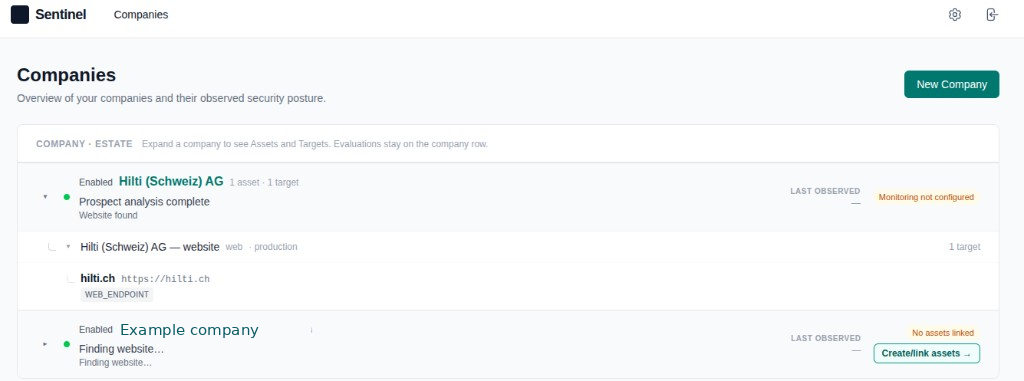
Companies, estate & prospect analysis
Each company is organised into its public assets and targets. When a company is added, SentinelHub can help find its public website and suggest the endpoint to monitor.
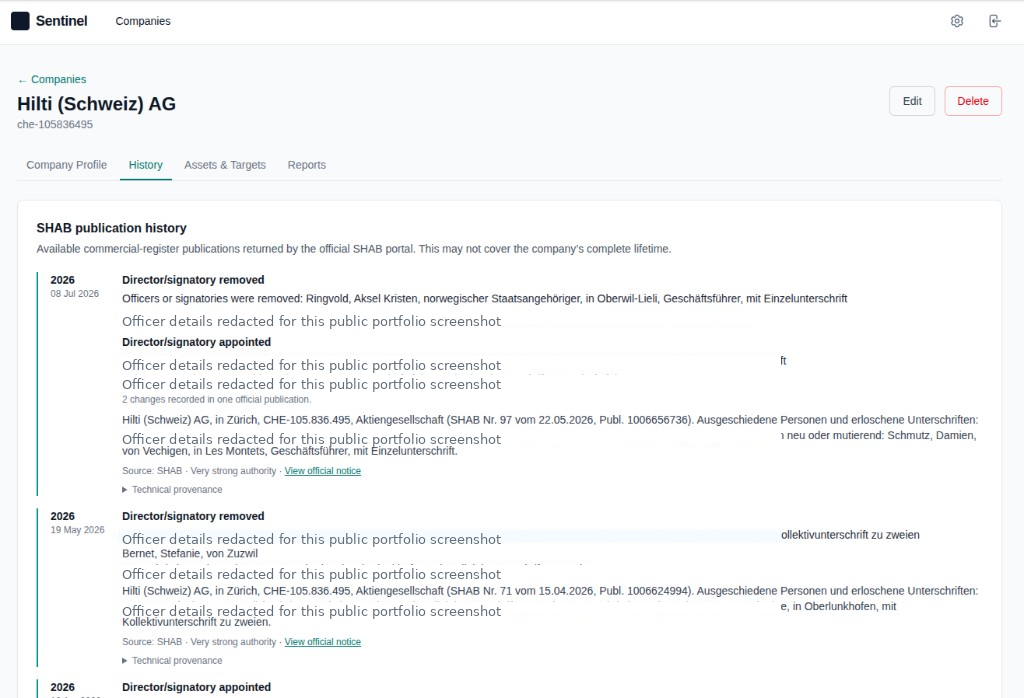
Commercial-register history (SHAB)
SentinelHub pulls available company-history records from the official SHAB portal and presents changes such as director or signatory updates in a clearer format, with links back to the original notice.
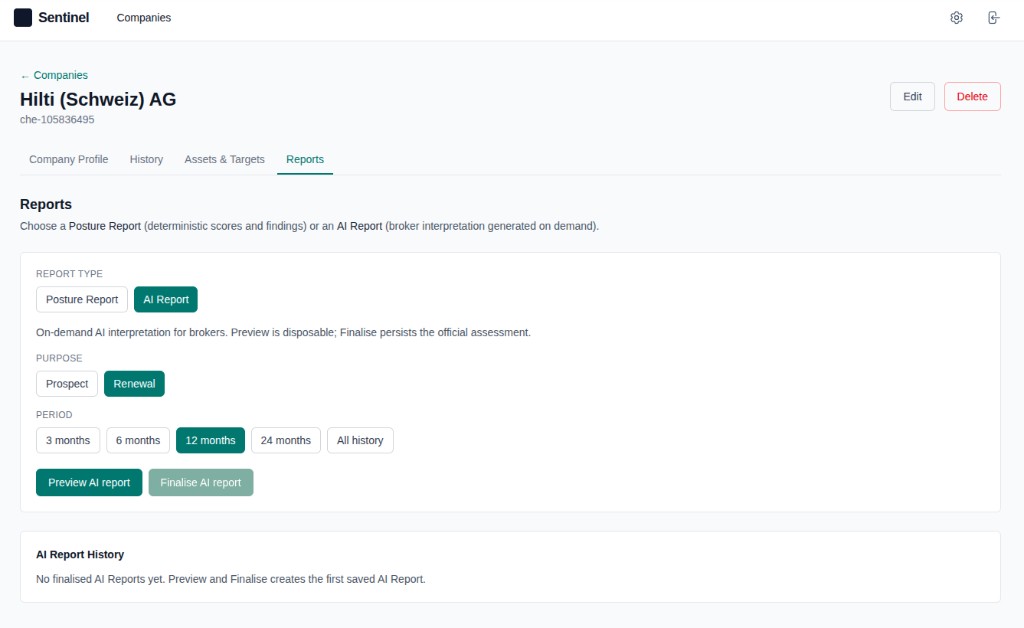
Posture report vs AI report
Brokers can choose between two report types:
- Posture Report — the actual security findings and scores from SentinelHub’s checks.
- AI Report — a plain-language interpretation of that evidence for prospect or renewal discussions.
Architecture
- Evidence first; humans keep underwriting judgement.
- Passive checks (TLS, DNS, headers, health, and similar) are normal code — repeatable, not model guesses.